44 20 いももち
| Prefecture | Tokushima (徳島県) |
|---|---|
| Region | Shikoku |
| Japanese name | いももち |
| Home area | All within the province. |
| Main ingredients | It's not just rice. It's just rice. |
History and Origins
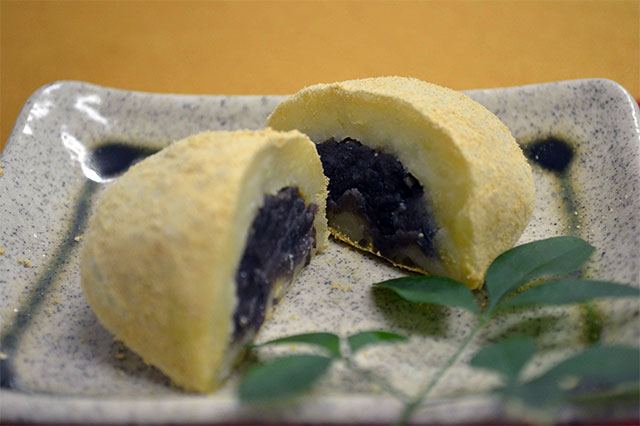
In Tokushima Prefecture, it is grown with a large crop. The nationally famous golden hour can be said to be "George Time," and Tokushima's mild, low - rainfall climates and ocean - rich mineral - rich soils are also good for making a living. The honey is a dough covered with steamed pollen. It is said that in the late 19th century, the Tokushima's Hakichi city was reached with a tin and that food with a cuddly snack became popular. Sugar and other sweets were then considered expensive and were difficult to obtain in a private home. However, the tasties were prized because they were sweet as well as potatoes, which was relatively easy to obtain and provide a feeling of satisfaction.
When It Is Eaten
At the time of the autumn harvest, the Children of the Sun, which is dedicated to the local god, was made as "Sun's Child" and was used for empty beans. It is also said that, along with New Year's Day celebrations, it was often associated with the custom of making a gift that was made with the rice that was born in the New Year's season. In addition, they say he was fond of them as a supplement, not to mention the food he had, as a later harvester of rice and potatoes.
How It Is Eaten
We make fabrics that are pasted in a paste, both with starches, sugars, salts and water. Then I'll split it up into about 50 grams, wrap it up, and roll it. I'll dust the finished finish with a fine dust. The tadpole is relatively discolorable, so it's best to peel it and then soak it in water. It's going to be a bright yellow.
Recipe
Ingredients
- 1(200 g) sweet potato
- 60 g 水【レンジで作る場合】
- 32 g glutinous rice flour
- 8 g refined white sugar
- 0.8 g salt
- 80 g bean paste
- 8 g kinako (roasted soybean flour)
Method
- If you make it in a bowl, I'll round it up to 4ths.
- I'll peel the tadpole and cut it into about three millimeters thick and give it 10 minutes to a monkey that can touch the water.
- Put two pinches in the heat-sharp bowl, and fill one-third of a cup with water and heat it for three minutes at a range of 500ws. It's not a fire. It's a fire.
- Mix potatoes with potatoes, powdery, white sugar, and hot water for 100 ml, and put them in a hood and mix them.
- Put four again in a heat bowl, heat it for two minutes by range, spread it out to 50 grams, and wrap it around a round bowl.
- I'll dust it up.
- If you're making it with a utensil, I'll round it up to 20 grams.
- The tadpole is boiled in water that is thin and thin and that is enough to hold the skin.
- If the nail becomes soft, I will heat it up and crush it with a screwer or blaster. I'll save it if you have more juice.
- I'll put white sugar salt in.
- If the dough is hard, mix it with boiling juice.
- If you mix it with a weak fire, you will have a clear feeling when the fire passes. I'll keep it cold. I'm going to round up a rounder especially for 50 grams per bottle.
- I'll dust it up.
More About 44 20
Japanese traditional food. However, there are different kinds of potatoes and methods of making to be used by the same name.
Hokkaido
In Hokkaido, "Absolutely." It's also called the "Nakako" word. There's no definite distinction, but it's a taste of the baked stuff. It's called "a coral."
Processing
I'm going to burn it up with potatoes, add potatoes or pieces of starch, and then add a good paste, and then I'm going to burn it up until it's as thick as a small conch or congeal, and then I'm going to burn it up until it's burned. They are served with sweetly seasoned sesame oil, butter sugar, and so on.
History
At that time, the production of rice was still under-growing, and it began with a rich product of potatoes and pumpkins.
Now, due to the production of "freezing," you may see it as a cheap fast food from Hokkaido, in the store's storeroom, in the service area of the highway. The powder is sold on the market, and there are variations in the pumpkin flavor and so on. It's also a favorite for children. It can also serve as a restaurant menu.
Variation
There's also cheese and cheese in the contents. There's a pumpkin instead of a potato. In Toyo districts there is a pumpkin-snap juice instead of a bowl of lye.
Wakayama PrefectureX124XZX025X
I'll mix the sweet potatoes that are steamed into the rice made in normal rice. It's popular to have a bowl of dough and dust in it. It's softer than a normal cucumber, and it changes with its own weight in time. The food is also soft.
They're eating around Wakayama Prefecture-day county.
Even Kochi Prefecture is made of exactly the same process.
Even Kagoshima Prefecture has the same formula in it, and it's called "Custom"
Gifu Prefecture
It's usually rice-souring, and it's made together with leather-snacked sea potatoes. I will fold the cooked thing with sticks and mix it with a stick and then shape it into a round shape. A paste made from a mixture of ground raw pepper and soy sauce is used to taste the sauce and cook it. It is characterized by the fragrance of raw oil that can stand in the cooking process. In the province, especially in the middle of the country, you can make an electric rice cooker for your family. It's also sold as a special product at local festivals.
Chiba Prefecture
A local meal that runs through the Chiba PrefectureXQX077X
There is a theory that is rooted in mixing soy sauce with corn in times of food crisis. It's also eaten by the Seven-Five-three celebration.
Niigata Prefecture Satura.
Niigata Prefecture Sasaki Island is a sweet treat making sweet potatoes as raw material.
It's a special product of Sasaki's traditional diet.
Text adapted and translated from the Japanese Wikipedia article いももち by its contributors, licensed CC BY-SA 4.0.
Dish data: Ministry of Agriculture, Forestry and Fisheries (MAFF), “Uchi no Kyodo Ryori” (Our Regional Cuisines) database, used under the Public Data License (PDL1.0); translated and adapted from the Japanese original.