Urinoteppōzuke 瓜の鉄砲漬
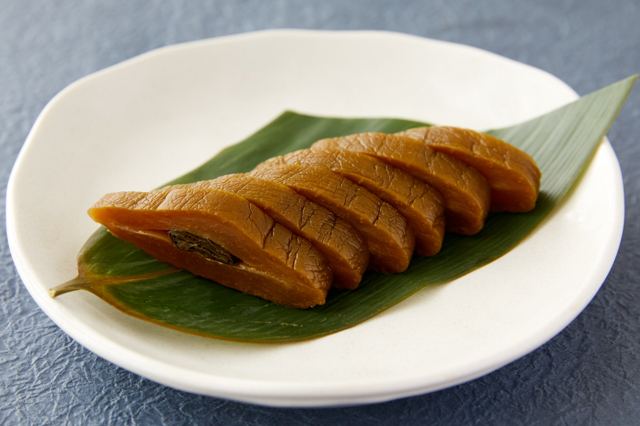
| Prefecture | Chiba (千葉県) |
|---|---|
| Region | Kanto |
| Japanese name | 瓜の鉄砲漬(うりのてっぽうづけ) |
| Reading | Urinoteppōzuke |
| Home area | Narita City and Ike City. |
| Main ingredients | I'm sorry. |
History and Origins
The peppers that were wrapped around the leaves were placed in powders, and they were packed with unscheduled oil and garlic with a principal taste. It's just peppered peppers. They have bitter, bitter teeth. It's one that can be eaten either as rice or as a bottle of wine. The hole was drilled through the barrel, and the blue pepper was like a bullet, so the name was attached to the gun. It is common to enjoy the flavor of soy sauce and the soft teeth of the cucumber. Also famous as a souvenir to the Shinji Shinji Narita in Narita, and for every number of Narita stores, there is a mixture of taste and content, and it is one of the ways to enjoy yourself, as well as eat and walk. There's also a brand-new bottle that even the teeth are so soft as to be eaten.
When It Is Eaten
In ancient times, crops were built in Narita areas as a reserve food for winter when no crops were available. Chiba Prefecture has been a great producer of silk for ages, and the production of the lily is still high throughout the country, and the "silence gun" has been made.
How It Is Eaten
A salted cucumber sometimes boils water, then salts it for two days and cuts it down well. The seasoning seasonings are boiling, cooling, filling the bowl, and making light lids. The next day, I'll take out the rice and cook the flavor again, so I'll boil it again and then I'll dip it in and drop it. I'll repeat this work for 4 days. I can eat in about a week. The flavoring is always cooked and cold and used.
Recipe — Serves 4
Ingredients
- 1 kg salty
- 200 g coarse sugar
- 2 cups soy sauce
- 1/2 cups sake
- 1/2 cups mirin
- 1 tbsp vinegar
- 10 shiso
- 3–5 green chili pepper
Method
- A salted cucumber sometimes boils water, then salts it for two days and cuts it down well.
- The seasoning seasonings are boiling, cooling, filling the bowl, and making light lids.
- The next day, I'll take out the cucumber and cook the flavor again, so I'll boil it up again, then I'll pack it up again, and then I'll drop the lid.
- I repeat the four-day process.
- I can eat in about a week.
- The salted pepper will dry well until the water runs out. The flavoring is always cooked and cold and used.
More About Urinoteppōzuke
Chiba PrefectureXAA and Ashiya City's home dish. It's a condiment made from a stamen. It's also known as the gift of Narita Shinji.
Overview
It's a dish that has been cut through the center of the bush and seen on a gun barrel and wrapped up in a powder of purple leaves, and then soaked with soy sauce and garlic.
It's rich and toothy, and it's eaten as food and as a bottle of wine.
It was once made in each home, but it's not in the rest of the country, so local luthiers are being watched, sold, and sold from many manufacturers.
In Narita's plywood shop, each store has a product that has a built-in taste and combination of content.
Birth and history.
Chiba Prefecture has long been a high production of silk and is still the highest production in Japan throughout Japan.
It was built in Narita as a winter reserve where crops would not grow.
It is estimated that during the Tokyo Year, the production of firearms began at what is now Narita City Dragons.
In the 1950's, when farmers made their own dishes, they served their customers a gun gun that had been prepared for flavoring at the branch office of the Chichisuke Narita, they made it for sale. Later, the Sakura Manuji of Narita City, Japan, succeeded in mechanicalizing the harvesting of seeds and made it possible to produce volume.
Source Change
In the 1930s, in the Chiba PrefectureX, the production of the lily was very high, and a gun gun barrel was built using Chiba Prefecture - based Shirai.
During the advanced growth period of the '40s, gun guns sold rapidly, and the Chiba Prefecture - producing Shireri could not afford to run the demand alone, so it began importing and using Taiwanian - producing snails. In the mid-'40s, the ratio of Chiba Prefecture to Taiwan's production will be about half the rate of use.
In 1966, the construction of the new Tokyo International Airport was decided, the farm was changed by the purchase of a suitable site for airport construction, and the farm was reduced as a residential area for those engaged in airport work, until there were no farmers around Narita to make a lily. After that, the production of the Shire will be reduced in Taiwan, and the importation of the Shire will be transferred to Indonesia, Thailand, and the Philippines. In a manufacturer in Narita City, the raw materials from the gun gun gun used to be imported by 100 percent in the '50s. Still, there was no fault, and sales were on the increase.
The price of raw materials was cut down, the cost of production was reduced, and the market's cost was down, but after 2000 years, consumers began to say, "The price was high, and I want to eat a barrel made from ZQQ076X. "
However, since there are no farms already, and people who were farmers once farmers have grown old, and their children are Salalyman and are no heir to agriculture, it is difficult to produce them right away. When the manufacturer of the case sold all the silk, pepper, and purple leaves that are raw, he got a good reputation when he sold the gun to the Japanese government.
From 2010 to 2010, JA Narita City and its production farmers began to work together as a "Sump Plum Project of Narita City" to restore the guns from Japan's domestic war machine. By 2021 ten contract farmers were producing a lily.
Text adapted and translated from the Japanese Wikipedia article 瓜の鉄砲漬 by its contributors, licensed CC BY-SA 4.0.
Dish data: Ministry of Agriculture, Forestry and Fisheries (MAFF), “Uchi no Kyodo Ryori” (Our Regional Cuisines) database, used under the Public Data License (PDL1.0); translated and adapted from the Japanese original.