Home / Chiba / Iwashinōnohanazuke
Iwashinōnohanazuke いわしの卯の花漬け
| Prefecture | Chiba (千葉県) |
|---|---|
| Region | Kanto |
| Japanese name | いわしの卯の花漬け(いわしのうのはなづけ) |
| Reading | Iwashinōnohanazuke |
| Home area | Seaside and Kyushu |
| Main ingredients | And I'm going to show you some examples of this. |
History and Origins
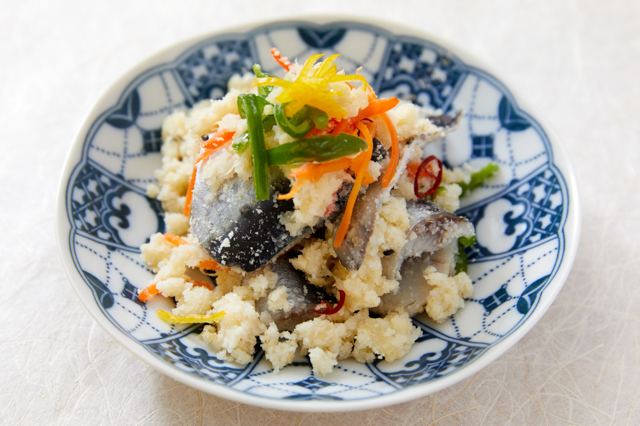
The Kyushu region is a treasure chest of sea and villages, and is a particularly old - known fishing resort. The eagle, which represents the region's nine - mile - long area, has a good catch since the time of Edo and can be likened to "Sea of the Sea." There is a wide variety of dishes with the flavor and rich nutrients of the familiar fish at the 930 table. Among them, "The Yule of the Sun" is a local dish eaten by New Year's Day, festivals, and other activities. We can also eat food on a regular basis. "The flower of the rose" is a dish that has been boiled freshly and soaked in more rice. It is also said that the flowers are covered with flowers because they are called the white-colored rice flower. Since it's the milk of the beans that you can make when making tofu, it's a healthy food rich in food fiber. It's said that by placing it in this pot, you can prevent molds and reduce the level of oxygen.
When It Is Eaten
Sequoia eagle, from around March November, is used by the giant eagle. It's eaten as a daily diet, a festival, and a New Year's meal. Also, you can buy processed goods sold in stores and on the Internet in the city, so you can eat them for the whole year.
How It Is Eaten
I'll salt the iridian after the process and leave it for a day. Wash the salt, soak the vinegar and sugar for another day. Put a bowl in the pot, cook it so it doesn't burn, heat it, add a flavor of vinegar and sugar. Peyman and carrots are cut into strips about three centimeters long, and salt is poured into them and draining out the water. I can add a slice of the egg's skin to it.
Recipe — Serves 4
Ingredients
- 300 g sardine (カタクチ)
- 100 g okara (soy pulp)
- 50 g bell pepper
- 30 g salt
- 50 g carrot
- yuzu peel, to taste
- ginger, to taste
- sesame seeds, to taste
- Mix: 75 ml vinegar
- Mix: 3 tbsp sugar
- Mix: 1 tbsp vinegar
- Mix: 2 tbsp sugar
Method
- Take the head of an eagle, take the internal bones and wash well with water.
- I'll shake salt on it and stay overnight. Wash it in water, soak it in taste A, and leave it for a day.
- (I will put the rice in a pot, watch the medium fire for 20 minutes, and then make time.)
- Peyman and carrots are cut into three-inch strips and then made into a little salt and wiped with Cooking paper.
- To add two to the dish, two to the culinary sauce, or four to the skin of the mustard sauce.
More About Iwashinōnohanazuke
It's a dish that was served with the vinegared eagle.
Overview
"The flower of the flower" is called "the flower of the flower of the flower."
From Towaji to Kyushu, it is a special place for Mee and the Great Eagle, and there are many native dishes with the eagle. Also, since tofu is eaten so well in the south wing, there is a lot of yield from the tofu product, and there are many other recipes that are made from sauce. The flowers of my rice bowl are one of those dishes.
There are many ways to make it, and there are ways to make it, where you can mix it up with an eagle that has been soaked in vinegar, and where you can mix it with a sweet taste.
You can build an eagle that was caught around March of November and March. In addition to being eaten during New Year's or festival events, they are eaten daily as food and regular food. Processed goods are sold in the year of the year.
Once, it was created by neighbors, such as Iseshima High School and the Cemetery. It was said that when the event was held, they would have more candy and that fifteen nights they would be served with a rabbit-shaped shape. These activities and customs are breaking down.
Text adapted and translated from the Japanese Wikipedia article いわしの卯の花漬け by its contributors, licensed CC BY-SA 4.0.
Dish data: Ministry of Agriculture, Forestry and Fisheries (MAFF), “Uchi no Kyodo Ryori” (Our Regional Cuisines) database, used under the Public Data License (PDL1.0); translated and adapted from the Japanese original.