Kujirano Tare くじらのたれ
| Prefecture | Chiba (千葉県) |
|---|---|
| Region | Kanto |
| Japanese name | くじらのたれ |
| Home area | South Cells |
| Main ingredients | Locust. |
History and Origins
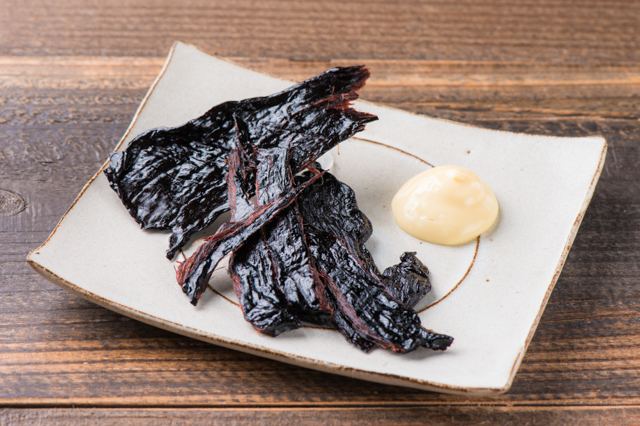
They look like coal and seaweed, black and bark like bark. The whale used for the "low of the bat" is a type of whale that is about 12 meters long. The existence of many whale skeletons from the ruins of Kamakura is thought to have been the beginning of coastal whalers in the cell block by the late 13th century, from the late 13th century to the 14th century in the town. It is characteristic of the South Ward's entire whale system that, even if the "net fishing" has become the main way, it has always been a "twisted" method that has been used to keep the thongs deep in the water and to keep them out of control. Until the days of the Showa, whalers were well-fished all over the country and were food for the common people. It is said to be a dish often set up on a table even in the average household, and that a "buddy" was created in times when there was no refrigerator. There is also the theory that the name "Burn of the Lollipop" comes from hanging the whales on the back of the house. Citizens of the South Cells have to taste it, and those who moved to other states who moved back home are known as the taste of their home as well as the taste of their home.
When It Is Eaten
The "bead of the lottery" that is processed as a reserve can be eaten throughout the year as a wine bowl or a bottle of wine.
How It Is Eaten
We soak whale meat in a mixture of soy sauce, wine, and ginger to make it taste good. After that, we take it out and dry it to the point where it's fresh. I'll burn it in fire and eat it.
Recipe — Serves 20
Ingredients
- 1 kg くじら肉
- 2 cups soy sauce
- 1 cloves garlic
- 10 g ginger
- a pinch sake
- a pinch mirin
Method
- Cut a pound of chicken into a thickness of about one centimeter.
- Two cups of soy sauce, garlic, ginger, mixed with wine, garlic, and soy sauce, and cooked with gravy.
- I'll sink into it for about two hours.
- I'll dry to the point of dry. That's not too dry.
More About Kujirano Tare
The whale's body was soaked in salt or taste and dried in the sun. Because of using nonblood whale meat, the color is black and the taste has its peculiar properties. It's used as a wine and a bowl. Chiba Prefecture, special product of the Southern Penitentiary.
Description
It's been made in the homes of the hooligans in order to make raw meat easily processed during the summer months when they're playing around. In the "The Food of the Hearing Book, " which compiled the early Japanese diet from the end of the Great End, we cut the raw whale into thin slices and salt it for about a day's dry. Salt particles from sea animals and fish can be called "sharp," and there is a theory that they are the source of the word "pill" by hanging meat in the sun before it is dry.
However, today, what is dried and soft and delicious is the main source of the current. In addition to household products, there will be sales by local manufacturers, and the manufacturers say that in 1973 there were proposed soft, oil - soaked characters. By the 1980s, both old and new ones were sold.
Although the traditional whalers were in demand from areas such as relatives gifts and the souvenir of a tray, there are also factors such as the rise in the price of meat from the tundra whale, with 26 annual catch in the port where they live.
Cooking.
Old-fashioned recipes are pretty hard to make as they are. Generally speaking, there's a way to eat lightly and then rip it open. It's important not to cook too much. Like sleme, may be made of mayonnaise.
In recent years some of them have been manufactured so that they can be eaten as they are by shipping at half-life, but they can't be stored for as long as they are hard.
Text adapted and translated from the Japanese Wikipedia article 鯨のたれ by its contributors, licensed CC BY-SA 4.0.
Dish data: Ministry of Agriculture, Forestry and Fisheries (MAFF), “Uchi no Kyodo Ryori” (Our Regional Cuisines) database, used under the Public Data License (PDL1.0); translated and adapted from the Japanese original.